
I think we’re watching an evolution of the internet that directly changes the way we build our businesses and our brands online - and I want to document it WHILE we’re inside it.
You’ll hear it described as the shift from SOCIAL MEDIA to INTEREST MEDIA. My guy Gary Vaynerchuk has been one of the louder voices making the case.
As a social media content strategist, creator, and coach, my work involves figuring out what a brand should be saying, making the content, and helping people get comfortable doing it themselves. So when the way people discover that content changes, it changes the work.
And right now, someone can become interested in what you’ve made BEFORE they have any idea who you are. Your next viewer may never have heard of you. Your post has to give them a reason to find out.
WHAT THE F⭐️CK IS INTEREST MEDIA?
In a model built around social connections, WHO you follow helps decide what enters your feed. In a model built around interests, WHAT you seem interested in helps the algorithm find content for you - including content from people you haven’t chosen to follow.
Both things happen on the same channels. The change we're currently living through is in the balance, and in how much discovery can happen outside your existing network.
Picture this 👉🏼 You’re selling cookies. You tell your friends; they tell their friends, and people buy because they know you or someone recommends you. The relationship introduces the cookie.
Now make a video breaking open a warm cookie. Melted chocolate EVERYWHERE. Someone who has never spoken to you in math class sees it and develops an urgent interest in your business.
Someone you know gives you a reason to care.
Something you care about introduces someone new.
That’s the distinction. Someone can care about the thing before they care about the person or brand making it. And if we’re trying to grow a business online, that’s an opportunity worth understanding.
AND IT WASN'T TIKTOK THAT STARTED IT...
We can trace this back much further than the last algorithm update someone explained to you in a reel.
Facebook’s News Feed arrived in 2006 and it was described as a way to see activity from your friends and your social network in one place. It was already personalized, but the network supplied the material.
Meanwhile, YouTube was developing another route to an audience. By 2010, its researchers had published a paper about its recommendation system. In 2012, it added watch time as a signal. Getting someone to click and giving them something they wanted to keep watching were becoming different jobs.
Instagram expanded Search and Explore in 2015. In 2016 - the year I graduated from marketing school - it announced a feed ordered by predicted interest, your relationship with the person posting, and timeliness. This, IMO, is where things start to get particularly interesting. Sorting posts from people you follow and recommending people you DON’T follow are different developments. Both are part of this history.
Then TikTok helped make personalized discovery the main event. Its 2018 merger with musical.ly described a For You feed based on viewing preferences. In 2020, TikTok explained that follower count and previous high-performing videos weren’t direct factors in its recommendation system, while acknowledging that having more followers could still bring more views.
You could find an audience without having already convinced that audience to follow you. The video could be the introduction. A dramatic game-changer across the board.

Instagram launched Reels in August 2020, with discovery through Explore. YouTube announced the first Shorts beta the following month, including a vertical feed for discovering short videos. The way we watched was changing dramatically alongside the way content found us.
By July 2022, Facebook was explicitly calling Home a discovery engine for new content and creators, while providing a separate Feeds tab for existing connections. That is a fairly significant thing for FACEBOOK to say about its own product.
All of this to say: when we talk about interest media in 2026, we’re describing an evolution that’s been developing for years. There was no single morning when everybody’s followers became irrelevant.
AND IT'S ONLY PICKING UP SPEED
Trial reels are a clear example. Instagram introduced them in December 2024 so creators could test content with non-followers first. Its stated reason was that people felt nervous about trying topics or formats their existing followers might not enjoy.
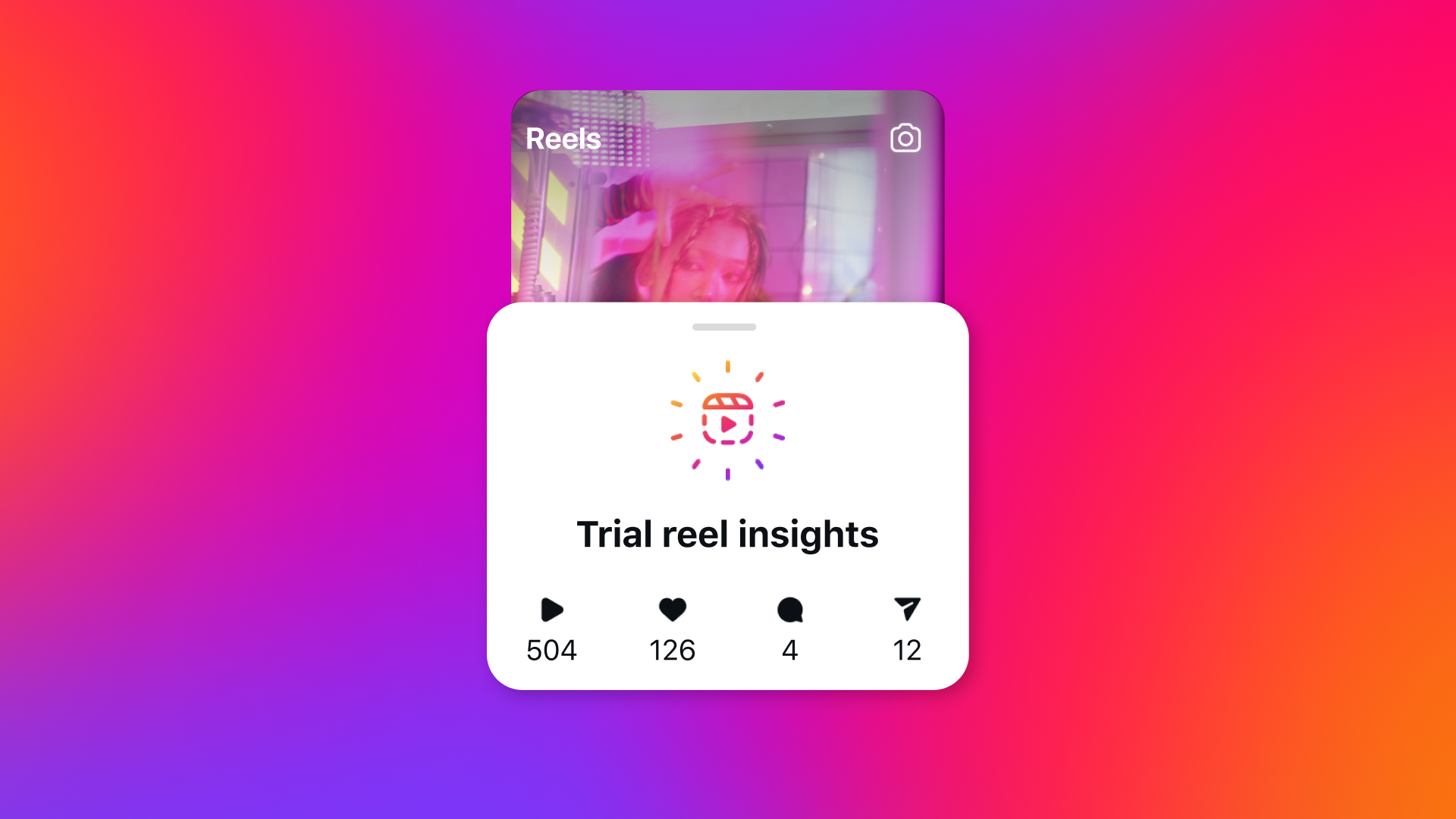
What interests me here is the gap between the audience we’ve already attracted and the people we want to find next. Those aren’t always the same people. A trial can help us learn about that introduction while we keep doing the work of serving our existing community.
It’s happening beyond Instagram, too. Twitter’s For You recommendations include content from outside your network. In March 2026, LinkedIn described feed changes that better understand what posts are about and how professional interests change, including content from people outside your connections. This applies to the things we teach and write about as well as entertaining videos.
The controls are changing, too. TikTok’s Manage Topics lets people influence how often subjects appear in For You. On October 13, 2026, Facebook announced tools that let people describe what they want to see in their own words. We’re rapidly moving beyond picking accounts to follow and into adjusting the interests behind recommendations.
A FEW BRANDS FULLY LEANING INTO AN INTEREST MEDIA STRATEGY...
Sabrina Carpenter’s Juno arrests were a useful pop-culture example. She flirted with someone in the crowd and playfully ‘arrested’ them with pink handcuffs. The segment gave the internet a recognizable format with a different interaction each time. Clips circulated through fan accounts. Someone could enjoy the flirting, the joke, or the guest without knowing the rest of her setlist.

Charli xcx’s Apple dance offered another way in. Creator Kelley Heyer made the choreography and explained how she developed it in a TikTok interview. Participation gave people something to do with the song. Their own videos could become someone else’s introduction to the music.
Duolingo turned the death of its mascot into an unfolding social story, with clues, theories, and people contributing to the bit. It eventually connected that participation to earning lesson XP to bring Duo back. You could enter through the comedy and end up with a reason to use the product.

And there’s Dr. Shereene Idriss, whose PillowtalkDerm identity grew through skincare education and myth-busting. A person can arrive because they have a skincare question, then begin trusting her through the way she explains it.
I’d look at what makes people come back to each of these brands, and how that connects to what the brand actually does. Then I’d get curious about what YOUR people would choose to spend time with. You have your own work, knowledge, and personality to draw from.
As a coach, I can't help but be drawn to the last example. When I share a clip from ✨ SOCIAL STUDIES ✨, someone gets to experience how I approach a problem. They can learn something and get a sense of what working with me might be like through the same piece of content.
SO. HOW TO BE INTERESTING? 🧐
I can already feel this conversation getting turned into another reason to obsess over views. And I need us to be a LITTLE more thoughtful than that.
An interest in watching something doesn’t automatically mean an interest in buying it. People can watch renovations for hours and never pick up a drill. Someone can enjoy your content and live nowhere near the business you need them to visit.
If you run a restaurant in Fredericton, the audience you’re building has to make sense for a restaurant in Fredericton. Local customers matter. Visitors matter. People who recommend you matter. Your location, your judgment, and the experience you offer need to come through in what you make.
This is why I still start with the audience.
We need to understand what the people we want to reach care about, how that connects to the business, and what gives them a reason to keep paying attention. Being interested in your audience is part of becoming interesting to them.
A post can earn attention because it’s useful, funny, reassuring, surprising, or specific enough that someone sends it to a friend.
WHAT I THINK THIS COULD LOOK LIKE IN 2031 🔮
I expect the way we describe our interests to get more specific and conversational. We already have the beginnings of that. I can imagine someone telling a channel, ‘I’m renovating a bathroom in an old house. Show me people who can explain this without making me feel stupid.’ Their situation and the kind of help they want could become a more direct part of discovery.
For an expert building a brand, that raises an interesting question about the content you’re making today. Can someone understand who it’s useful for? Are you showing the judgment they would want help from? Those are decisions we can make without waiting five years for a feature.
I also think more businesses will treat their channels like programming. Recurring formats people recognize and want another episode of. A stylist helping someone work with what’s already in their closet. A builder explaining the decision behind one part of a renovation. There’s a reason to watch today, and a reason to remember who made it tomorrow.
At the same time, I expect AI to make producing content easier and the volume of available content larger. My bet is that people will place more value on knowing whose judgment they’re getting. Your point of view, your taste, and the way you handle a real question become things people can recognize and return for.
I expect people to want more choice about when they’re discovering strangers and when they’re keeping up with people they already care about. Facebook’s 2025 Friends tab, introduced without recommended content, is already evidence of that balance being addressed. I think we’ll see more ways to manage it.
So the business I’d want to be building towards 2031 is one people can discover through an interest and then find again on purpose. Through a channel they choose to follow, a website they remember, or a newsletter they actually want to open.
DON'T FORGET! WE STILL HAVE A BRAND TO BUILD
This is why I keep coming back to:
Interest can earn the introduction. Then I want someone to remember who made the thing they enjoyed, understand what that person or business stands for, and have reasons to trust them. When there’s a relevant opportunity to work together, buy something, or recommend them, that relationship has somewhere to go.
It’s social media. So the media should be social. I still believe that.
A reel someone sends to their business partner is part of a relationship. So is the conversation that follows it. Discovery and connection keep feeding each other.
As a strategist, I want to understand how this works. As a creator, I have to make things people choose to spend time with. As a coach, I want business owners to understand that there is an opportunity here without feeling like they have to become somebody else to use it.
And as someone who writes about the internet, I want a record of this moment before we get five years down the road and flatten the whole thing into ‘and then TikTok changed everything.’
We’re here, in October 2026, watching our channels change what it means to find an audience. I’d like to see more good businesses make that introduction on purpose.
The Sunday Social goes out every week. If this one was worth your time, pass it on to someone who needs to hear it.
- Gary Vaynerchuk on social media vs. interest media — GaryVee Substack
- Facebook News Feed launch (2006) — Meta Newsroom
- The YouTube video recommendation system (2010) — Google Research
- Instagram's all-new Search and Explore (2015) — Meta Newsroom
- musical.ly merges into TikTok (2018) — TikTok Newsroom
- Introducing Instagram Reels (2020) — Meta Newsroom
- Home and Feeds on Facebook (2022) — Meta Newsroom
- Instagram trial reels (2024) — Meta Newsroom
- For You timeline recommendations — X Help Center
- Manage Topics and new discovery tools — TikTok Newsroom
- Sabrina Carpenter's Juno arrests — PAPER Magazine
- Kelley Heyer and the Apple dance — TikTok for Business
- Duolingo, The Death of Duo — The One Club
- Dr. Shereene Idriss, our story — Dr. Idriss
- Kelley Heyer on the Apple dance — BBC Radio 6 Music (YouTube)
- Sabrina Carpenter, “Juno” arrests — Billboard and People
- Sabrina Carpenter handcuff clip — Sabrina Carpenter on GIPHY
- Bringing the magic of friends back to Facebook (2025) — Meta Newsroom
Want help making the introduction on purpose? 🍪
I help good businesses figure out what to say, make the content, and get comfortable showing up — so the people who discover you through an interest have a reason to stick around.
Let's Talk →